What Workers Want: The Latest on Financial Wellness and Employee Benefits

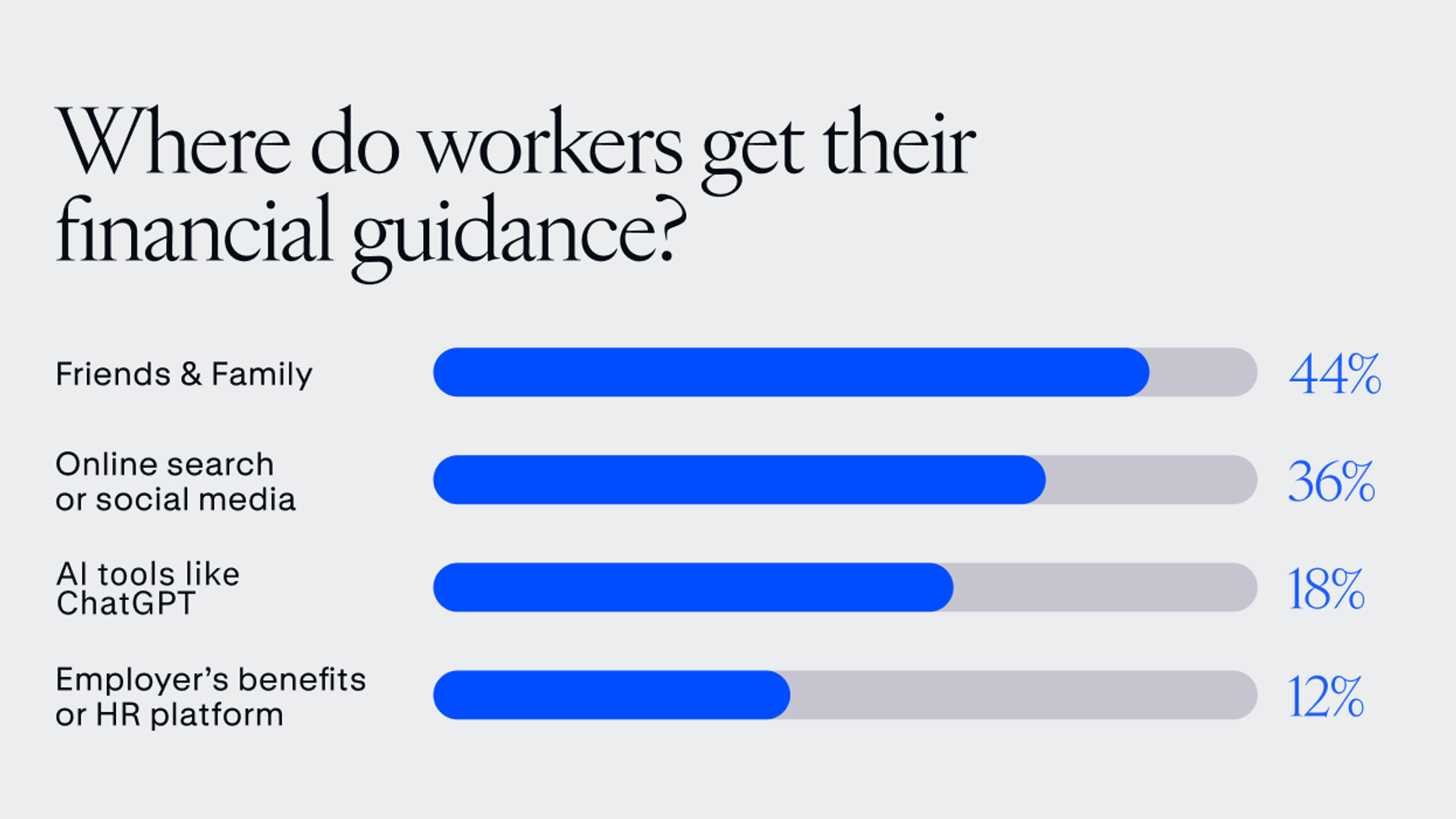
Employers are putting more money into benefits than ever. Meanwhile, workers are turning to friends, search engines, and AI chatbots to figure out what to do with their money—and only 12% are turning to their employer, according to Vestwell’s 2026 Saver Survey.
New data from Vestwell and Franklin Templeton shows employees and employers are both working hard on financial wellness, and largely missing each other.
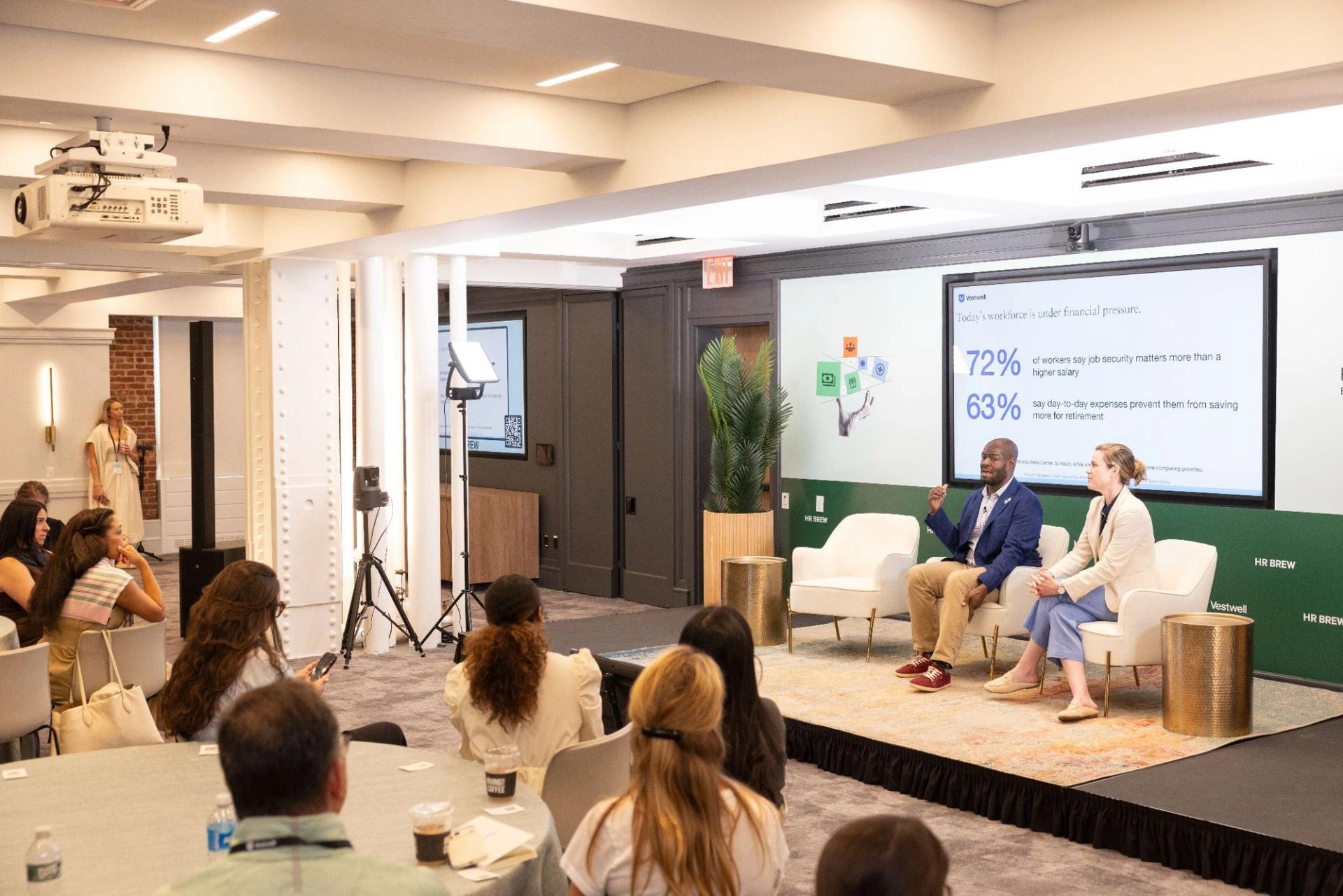
At HR Brew Live, Vestwell’s Kevin Gaston, VP, Head of Strategic Retirement Consulting, and Franklin Templeton’s Jacquelyn K. Reardon, Head of US Marketing, had a fireside chat and compared notes on the findings of their latest research. Their conversation explored how HR leaders should approach their benefits budget for next year.
The Financial Pressures Shaping Today’s Workforce
Workers’ worries are changing. Franklin Templeton’s 2026 Voice of the American Workplace Survey found that 72% of workers say job security matters more to them than a higher salary.
The timeline for financial independence is stretching, too. Since 2023, the age at which workers expect to retire has moved from 55 to 59, Franklin Templeton found. Four years, in just three.
Vestwell’s research points to the mechanism behind it: cash flow.
63% of workers name day-to-day expenses as the top barrier to saving more—ahead of credit card debt, emergency savings, and student loans.
And it’s not a low-income problem. Among workers earning $125,000-$200,000, more than half still name day-to-day expenses as their primary barrier to saving for retirement. And 64% of workers earning $200,000+ say they are only somewhat confident about where their next dollar should go, according to the same survey.
“Security about expenses and the ability to save doesn’t end once someone reaches a certain income,” Kevin said.
Two Sides of the Same Benefits Package
None of this is for lack of trying. 81% of employers agree their benefits budget will need to increase significantly in the next 12 months, Franklin Templeton found.
But running these expanded benefits has presented new challenges. 68% of employers say the benefits landscape has become increasingly complex to manage efficiently, according to Franklin Templeton. 88% say HR teams are expected to take on a wider range of responsibilities than ever before, according to the same survey.
Workers feel this complexity from the other side. Franklin Templeton’s survey found 53% of workers feel overwhelmed by the number of options in front of them, and 88% want benefits explained in plain language rather than HR jargon.
“Employers keep adding to the benefits stack, but what's the actual engagement with those offerings?”
Vestwell’s data shows where that friction lands. Among workers who delayed or ignored a financial benefit their employer offered:
- 16% said they didn’t know it was available
- 10% said they didn’t know how it worked
- 6% said getting started felt too complicated
The reality is that this problem is fixable. It comes down to closing guidance gaps in the benefits employers have already paid for.
Guidance Is the Missing Piece
The appetite for guidance is there—employers just aren’t where workers go to find it. Franklin Templeton’s survey found 91% are interested in a more personalized 401(k) investment option, up six points from 2025. 89% value online tools and employer programs that simplify financial planning, and 76% say their employer could do more to help them understand investment options, according to the same survey.
Employers are hearing it: 88% agree personalized benefits are among their employees’ top requests, and 79% are prioritizing personalized benefits over the next 12 months, according to Franklin Templeton. Many are using new tools to get there—85% of employers say AI has been helpful in managing or personalizing benefit packages, the same survey found.
Which brings us back to the data point at the very heart of this issue: 12%. When Vestwell asked workers where they go for financial guidance, 44% said friends and family, 36% said online search or social media, and 18% said AI tools like ChatGPT. Only 12% named their employer’s benefits or HR platform. Fewer workers turn to their employer than to a chatbot.
The solution here is not to pile on more and more benefits. It’s to provide real, practical guidance that meets a saver where they are and answers a specific question: given everything else going on in my financial life, what should this next dollar do?
A New Model for Workplace Financial Wellness
The old model was linear and hopeful: announce benefits and hope employees use them.
Research points to a different approach: understand the financial pressures workers face and deliver personalized guidance.
The support you provide at the moment of decision is an essential part of the benefit.
Where Employers Can Start
- Audit for awareness, not just adoption. If workers are skipping benefits because they don’t know they exist, your usage numbers are measuring the wrong thing.
- Translate everything. 88% of workers want benefits explained in plain language rather than HR jargon, Franklin Templeton found. It’s probably the least expensive improvement that most HR teams can make.
- Prioritize guidance over additions. Before adding a benefit, make sure workers can get clear answers about the ones already offered.
- Meet savers where the decision happens. Paycheck-level, personalized guidance reaches people at the moment the money moves.
To Vestwell Is to Guide Every Dollar
Employers are the most trusted financial resource most workers have, but when complex offerings lack essential guidance, that trust doesn’t mean much. Closing the gap between what employers offer and what workers understand is the highest-leverage work in benefits today.
“Employees look to HR for a resource. If you’re seen as a resource, then you can attract, retain, and reward your employees.”

At Vestwell, we’re building a platform that makes that possible with personalized guidance, goal-based investing, and support for every saver at every income level.
See Vestwell’s 2026 Saver Survey and Franklin Templeton’s 2026 Voice of the American Workplace Report to explore the complete findings discussed.
Source: Franklin Templeton, Voice of the American Workplace Survey, April 9, 2026. Available at: https://www.franklintempleton.com/insights/voice-of-the-american-workplace-survey. Survey methodology, sample size, field dates, and definitions are available in the linked report. Accessed September 16, 2026.
Franklin Templeton is not affiliated with Vestwell. This content reflects a joint conversation between the two companies at HR Brew Live and does not constitute an endorsement, partnership, or business relationship between Vestwell and Franklin Templeton.